【TOKAS Hongo】Announcement of successful candidates for OPEN SITE 11
OPEN SITE is a Tokyo Arts and Space (TOKAS) open call program which began in 2016 and aims to build a platform that brings together projects focused on artistic expression across all genres. This year marked the 11th annual call for proposals, and a total of 482 applications were received. Following a strict selection process, successful candidates included four projects in the Exhibition category, two projects in the Performance category, and two projects in the dot category. These projects will be implemented including the TOKAS Recommendation Program and the TOKAS Art Mediation Program from November 2026 to February 2027.
Execution Projects
Exhibition
Open hours 11:00-19:00 / Admission free
Opening talk with jury members will be held on the first day of each part.
Part 1|Nov 21 (Sat) - Dec 20 (Sun), 2026
Name LIU Zihan
Title “When Error Appears”
Drawing on advertising capitalism, deepfakes, and AI’s colonial gaze, this exhibition examines how reality is recognized and classified by systems through video and AI-generated imagery. It focuses on the gaps and distortions that emerge when bodies are processed within systems of labor and social governance.
Name Fransisca Angela
Title “The Magnolia Grows at Night”
An exhibition in which a granddaughter traces how her grandmother's friendship with a Dutch nun is carried forward into relationships with Indonesian nuns living in the Netherlands through a spatial moving image installation.
Part 2|Jan 9 (Sat) - Feb 7 (Sun), 2027
Name Eugene JUNG
Title “SEWER vol. 1 Gomiyashiki”
A group exhibition translating zine logic into space, investigating how informational excess coalesces into material environments.
Name HARA Chinatsu
Title “Opposite Shore”
The latest work in an ongoing series by an artist exploring the memory of Hidden Christian sites. Set on the Goto Islands, Nagasaki, it focuses on cultural transmission, transforming layered time into an embodied experience.
Performance
The schedule will be announced on the TOKAS website and flyers.
Booking required / Admission paid
Part 1|Nov 27 (Fri) - Nov 29 (Sun), 2026
Name YONEKAWA Koh Leon
Title “Marginal New Town or (Necromancy of the Abandoned Houses)”
Many new towns were developed during Japan’s economic bubble of the 1980s and left behind after its collapse. Inspired by them, this performance unfolds through text, objects, sound, and moving images to bring distant events and landscapes into the here and now.
Part 1|Dec 18 (Fri) - Dec 20 (Sun), 2026
Name LI Wen-Hao
Title “SOLO”
A lecture performance traces the journey of an Indonesian folk song "Bengawan Solo" across post-war Asia, exploring histories of migration, translation, and cultural circulation.
dot
The schedule will be announced on the TOKAS website and flyers.
Admission free
Part 2|Jan 30 (Sat) - Jan 31 (Sun), 2027
Name TOYODA Eureka
Title “Acting on Your Behalf”
A performance-based installation in which the audience directs the performer through digital media, exploring indirect and refracted forms of communication.
Part 2|Feb 5 (Fri) - Feb 7 (Sun), 2027
Name OHTAKE Sao, PARK Jiyou
Title “Habitable Zone”
A participatory installation using fabric, thread, and voice, in which Japanese and Korean artists explore forms of coexistence grounded in bodily presence rather than institutional proximity.
In addition to the open call programs, TOKAS will present a recommendation program and an art mediation program.
Both are admission free, Booking required for the art mediation program.
TOKAS Recommendation Program
Part 2|Jan 9 (Sat) - Jan 24 (Sun), 2027
Name Joaquín ARAS
Title “Memory is a film (tentative)”
An installation by an Argentina-based artist who participated in the TOKAS residency program 2024. Based on the art of katsudō shashin benshi, a type of performance that was popular in Japan during the silent film era, this exhibition explores the relation between cinema, affect, and memory through film, sound, and objects.
TOKAS Art Mediation Program
Part 1 | Dec 5 (Sat) and 6 (Sun)
Name AOYAGI Natsumi, HOSOI Miyu
Title “Listening to the Drawn Lines in Hongo”
A workshop led by Aoyagi Natsumi and Hosoi Miyu, who were involved in creating for the “‘TOKAS Hongo Guide Map’ audio guide” in 2025.
By exploring and observing the area around TOKAS Hongo, each participant will create their own audio guide using sounds and voices to seek out new perspectives on familiar scenery and the surrounding environment.
Application Overview
| Application period | Feb 19 (Thu) – Mar 17 (Tue), 2026 |
|---|---|
| Total number of applications | 482 |
| Jury members | HATANAKA Minoru (Curator, Critic of Music and Art) KAWASAKI Yoko (Co-Artistic Director, Kyoto Experiment) KOBAYASHI Haruo (Director, blanClass) KONDO Yuki (Program Director, Tokyo Arts and Space) |
Jury Member’s Reviews
HATANAKA Minoru (Curator, Critic of Music and Art)
OPEN SITE seeks work that is at once contemporary and experimental, and that reflects the social conditions of the present. This year the jurors’ assessments diverged very little, and on the whole expectations for the projects’ realization were high. That is not to say the submissions were homogeneous or uniform. If anything, the artist behind each selected project confronts our current era through an approach entirely their own. The interview presentations left little cause for concern, and by any measure the proposals were highly promising and the people behind them highly capable. That made the final round all the more challenging, and jurors’ opinions were divided over what the decisive factor ought to be. How each project will finally take shape, and what it will become once realized, will be clear only when it appears as an exhibition. Helping to guide direction at that closing stage is part of a curator’s job, but it is not possible at this stage. Even so, I would like to think that judging, too, is its own kind of collaborative process.
KAWASAKI Yoko (Co-Artistic Director, Kyoto Experiment)
This was my first time on the jury, and I was astonished by the volume of applications from overseas, as well as, of course, those from within Japan. That told me how much attention OPEN SITE now commands, and it confirmed that the program is recognized and functioning as a platform for experimental work that spans multiple genres and media. The proposals that reached the interview stage were closely matched, which made the decisions a genuine challenge, and throughout I kept returning to a single set of questions: why does this work need to be shown now, in this program, and at TOKAS? Each of the proposals we chose has a singular viewpoint, along with a compelling sense of necessity as to why its particular theme was placed at the center of the project or the work. That sense of necessity has different roots, from personal background to years of research. However, every one of them unquestionably reflects our society and the historical moment we are living through now. I look forward to seeing these projects realized.
KOBAYASHI Haruo (Director, blanClass)
This year’s OPEN SITE drew noticeably more applications from overseas than last year’s. Perhaps in part because we announced the open call on Instagram and elsewhere, the distance between us and artists working abroad seemed to have shrunk more than ever. The quality of the proposals also seems to improve year by year, and the field this time was strong enough that any of them could have been chosen without the slightest decline in standards.
Precisely because so many of the proposals were so well put together, I found myself circling back to the question of what “experimental” really means. This time I kept in mind, in particular, the implications of presenting work in the compact galleries at TOKAS Hongo. That may have tilted things slightly toward solo shows and work by collaborative teams, rather than curated group shows.
Ultimately, the selected proposals share a common stance. In each, the artist engages, from a distinctly individual standpoint, with issues that exist across multiple layers within the place, region, base of activity, or medium they address.
KONDO Yuki (Program Director, Tokyo Arts and Space)
OPEN SITE calls for “projects with contemporary perspectives pursuing completely new forms of expression to realize creative projects that pose questions to society,” but that does not mean it accepts only new work. At the same time, a program whose mission is to “support cutting-edge and experimental creative activities” aims to give artists opportunities to undertake new endeavors. That is why our discussions always return to one question: in what way does a given work challenge the artist who proposes it? A work that an artist has invested time and effort in creating should never be treated as something to be consumed once and then set aside. Even so, simply dropping finished, prepackaged works or projects into OPEN SITE as another stop on a tour is of little interest. What is the significance of staging a given project at this particular venue? The proposals we selected this year, through these distinctly OPEN SITE considerations, are a mix: some are composed of new works, others of existing ones. What does it really mean for work to be site-specific, and how does that shape the work, or the experience of the viewer? This round of judging prompted me to think anew about these questions.
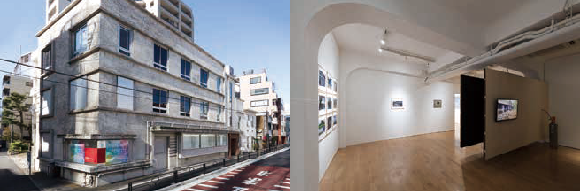
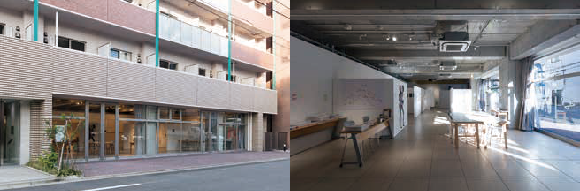
Our Facilities