Madhushree KAMAK
- TOP >
- Residency Program >
- Invited Creators >
- Madhushree KAMAK
Curator Residency Program
update: 2026.10.28
Madhushree KAMAK
| Participating Project | Curator Residency Program |
|---|---|
| Activity Base | Bengaluru(India) |
| City / Place stayed | Tokyo |
| Period | 2026.5 - 2026.7 |
Purpose of the residency
I wish to use the TOKAS residency to develop a curatorial understanding of how biotechnology erases agricultural heritage in India and Japan — two deeply rice-centric cultures facing similar pressures from corporate monocultures. Tokyo's proximity to rice-growing regions, institutions such as the NTT InterCommunication Center (ICC), Miraikan and the NARO genebank, and a thriving bioart community will allow me to conduct fieldwork and, build collaborations with Japanese artists and scientists.
Plan during the residency
- Archival and institutional research at places like NTT InterCommunication Center (ICC), Miraikan and the NARO genebank. Fieldwork visits to heritage rice-growing regions in Niigata Prefecture.
- Meet and connect with Japanese artists, scientists, and community groups interested in bioart, agriculture, rice cultures, facilitated through Bioclub Tokyo and TOKAS.
Activities during the residency
As a Curator in Residence at Tokyo Arts and Space, I was developing Chasing Rice, a research project tracing how colonial agricultural science, the Green Revolution and corporate biotechnology have displaced heirloom rice varieties across India and Japan.
I built a research network with historians, geneticists and rice specialists , Fujihara Tatsushi (Kyoto University), Kaori Iida (SOKENDAI/NIG), Sato Yutaka (NIG, custodian of the Kihara wild rice collection), and rice meister Koike-san in Harajuku — alongside artist collaborators.
Research included archive and museum visits (National Diet Library, NARO Tsukuba, Shinjuku Historical Museum). The residency concluded with an Open Studio (17–19 July) presenting seven Indian rice varieties alongside Japanese counterparts, testing participatory, sensory formats for making genetic colonisation legible to public audiences.
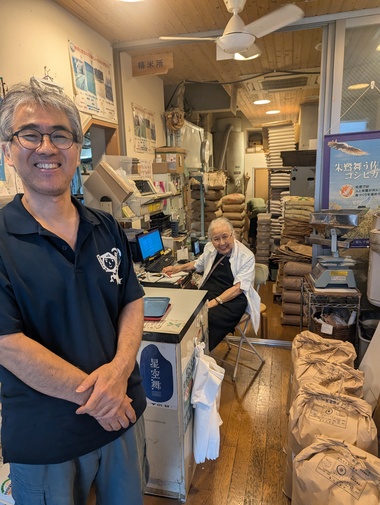
Research visit at interview with rice Meister Tadao Koike
©Madhushree Kamak
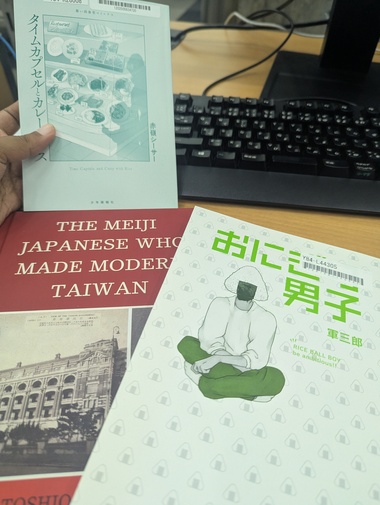
Research Materials on colonial rice history at National DIet Library
©Madhushree Kamak
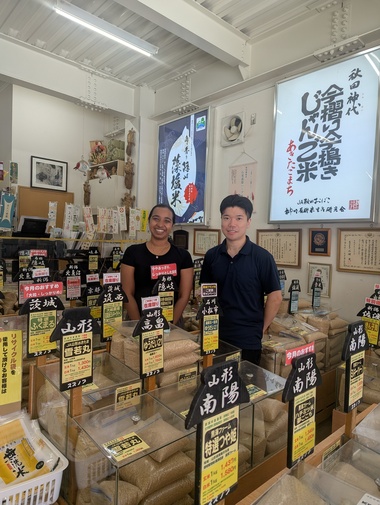
Visit to Suzunobu Rice project
©Madhushree Kamak
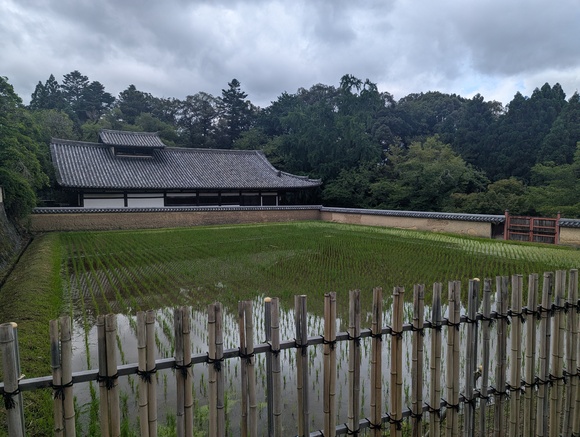
Temple rice fields at Nara
©Madhushree Kamak
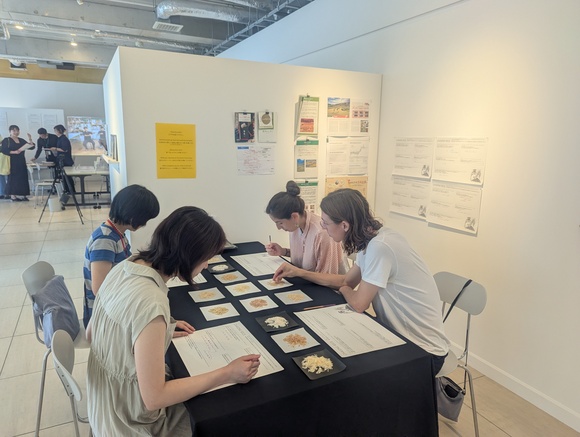
Residents testing installation at Open Studio in TOKAS
©Madhushree Kamak
Outcome of the residency
The residency's core achievement was building a durable research network spanning colonial agricultural history, plant genetics and rice craft, testing the comparative India–Japan method that Chasing Rice depends on.
The Open Studio translated three months of archival and interview research into a public participatory format, trialling how unfamiliar rice varieties can carry a political argument about seed loss.
This Japan chapter now anchors an India fieldwork phase (Bengaluru/Mandya, Chennai, Kolkata) currently proposed to the India Foundation for the Arts. In hindsight, I would have built in a visit to one of the historic regional rice-breeding stations (e.g. Akita or Kyushu) that Fujihara Tatsushi described, since research stayed concentrated in Tokyo and Kansai.
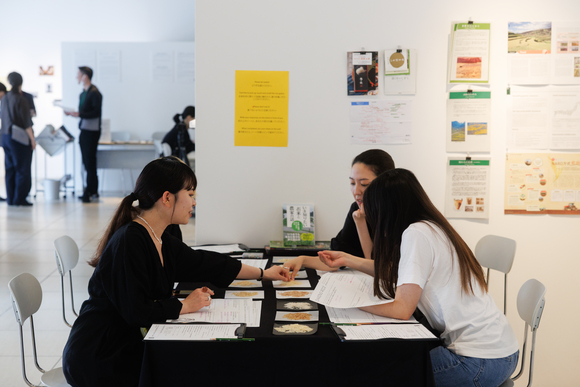
Visitors engaging with participatory installation at Open Studio in TOKAS
©Yuki Maniwa
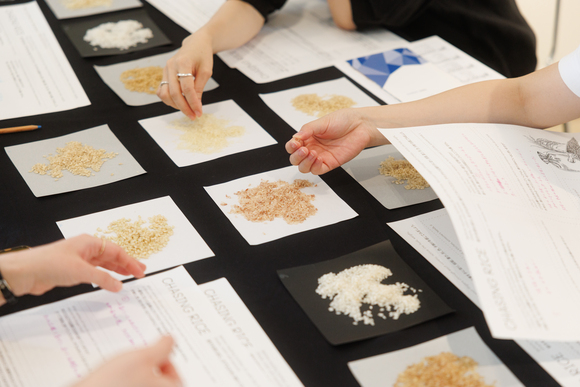
Rice samples at the Participatory installation at Open Studio in TOKAS
©Yuki Maniwa
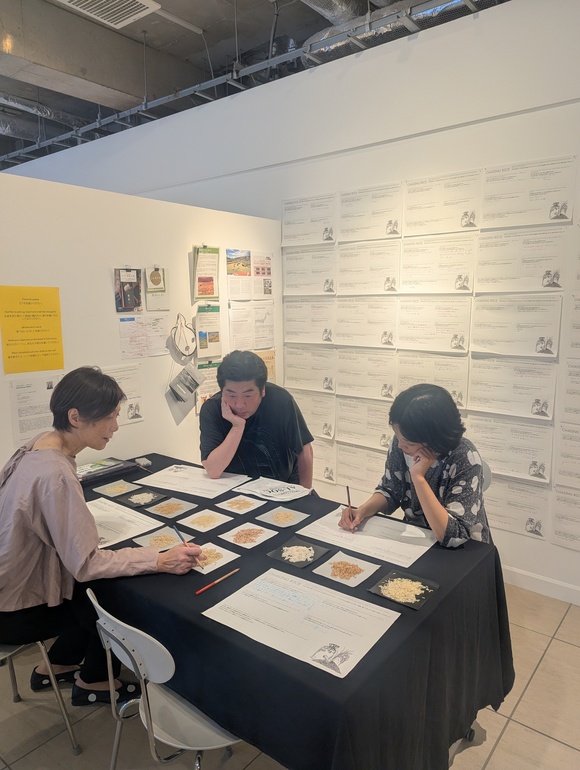
Visitors having a conversation on rice samples displayed at the installation at Open Studio in TOKAS
©Madhushree Kamak
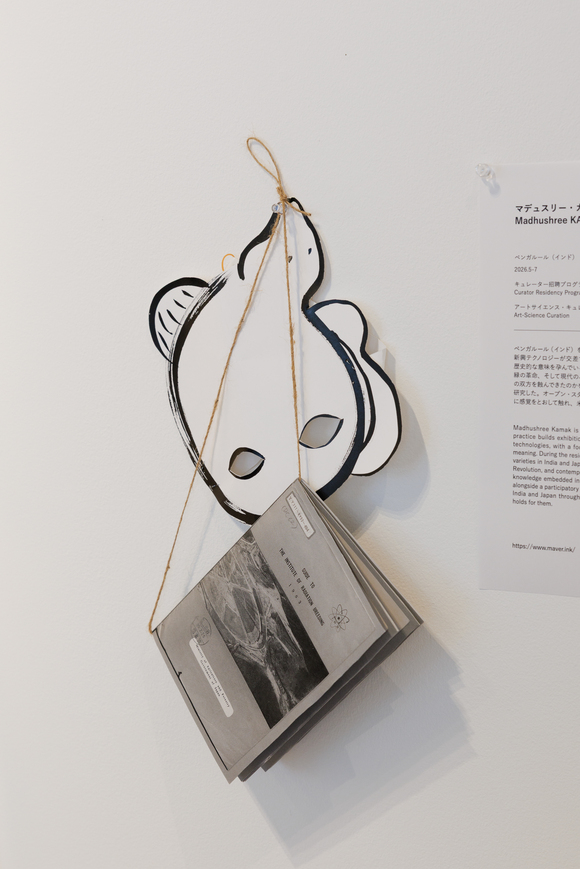
Research material on display at Open Studio at TOKAS
©Yuki Maniwa
Our Facilities