Jennifer Merlyn SCHERLER
- TOP >
- Archives >
- Residency Program >
- Jennifer Merlyn SCHERLER
Exchange Residency Program
(International Creators from abroad)
update: 2025.9.11
Jennifer Merlyn SCHERLER
| Participating Project | Exchange Residency Program (Creators from abroad) |
|---|---|
| Activity Based | Basel |
| City / Place stayed | Tokyo |
| Period | 2025.1 - 2025.3 |
Purpose of the residency
I intend to continue my research on grieving rituals and strategies. I am interested in how traditional and digital ways of grieving differ and resemble among different cultures and how they change when they are related to the loss of people or the loss of fictional characters.
People who grieve fictional characters are fans – and Japan has particularly strong and particular fan cultures which I wish to engage with. Both fandom and grieving is tied to gender performance, part of my exploration are hence also Japanese gender expressions. From traditional to popular to queer.
Plan during the residency
- Research on grieving rituals and strategies. Visit places of mourning both digitally and physically. Read, and talk to people.
- Engage with Japanese fan and gaming culture.
- Visit maid cafes and macho cafes. Explore Japanese gender expressions.
- Create sketches for new video works.
- Learn from Japanese silversmith craft as a manual balance.
Activities during the residency
During my time in Tokyo I visited and thought about Maid Cafés – with an interest in the coming to life of gender and affectional relationships in these spaces, where customers interact with a fictional, 2.5-dimensional maid character. I tried to observe where the gender performance and way of being social breaks out of the normative. Following my longer interest in the cultural differences in grieving rituals and expressions of condolences in both the off- and online world, I was particularly drawn to graduation events in maid cafes, where a maid performs her character officially for the last time, and thus also performs her character’s death. Roughly two days a week I spent in a silversmithing workshop where I took classes learning the Uchidashi technique. With this traditional Japanese silversmithing style, a three-dimensional shape is hammered out of a single flat metal sheet. I created two silver Tamagotchis, with both the Japanese and international death screen of the first-generation release.
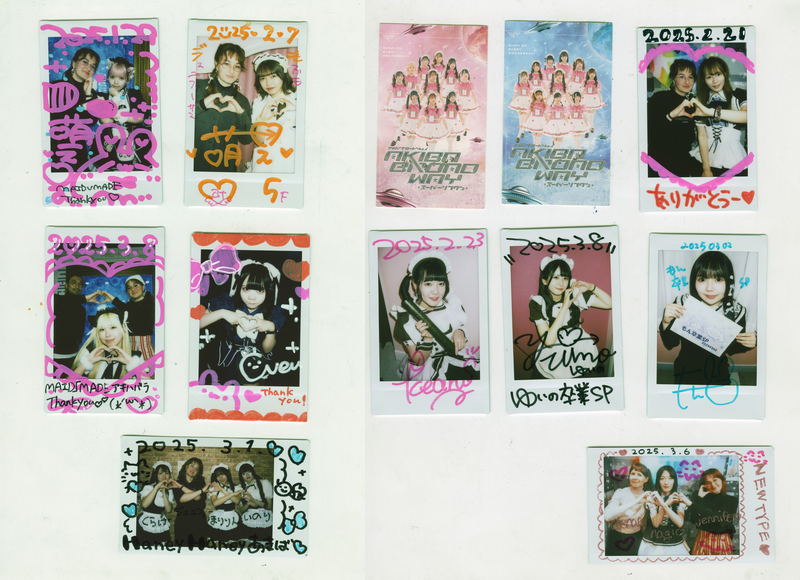
2025, scans of various checkis done at different maid cafés during my stay
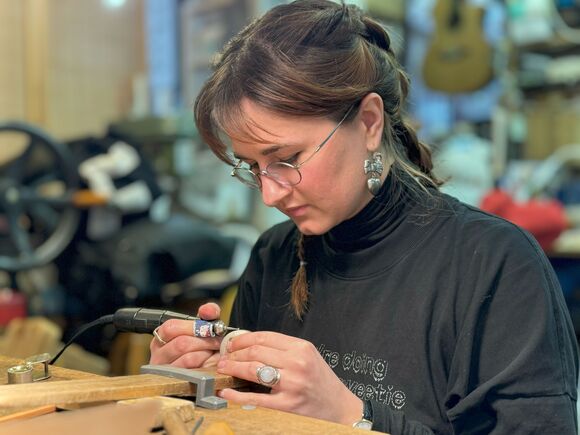
Jennifer engraving on silver
Mirroring patterns first made with traditional tools
Photo: Izumi Ken
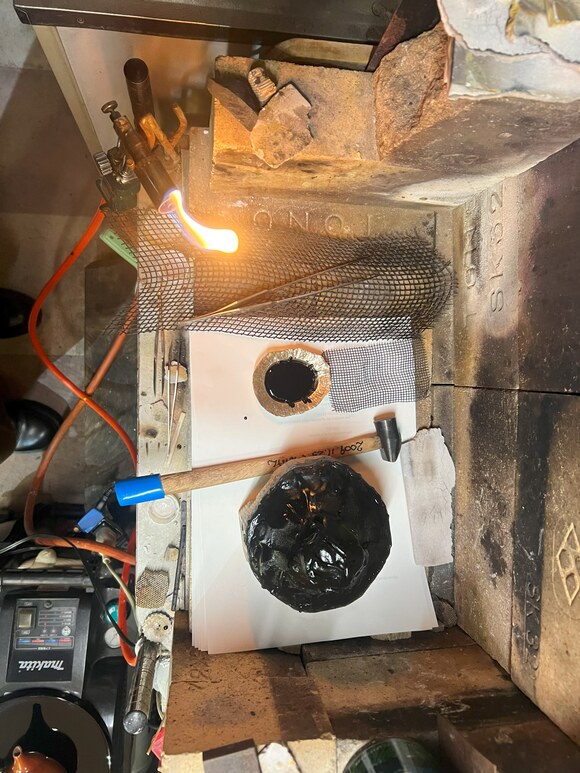
Setting silver plate to hammer
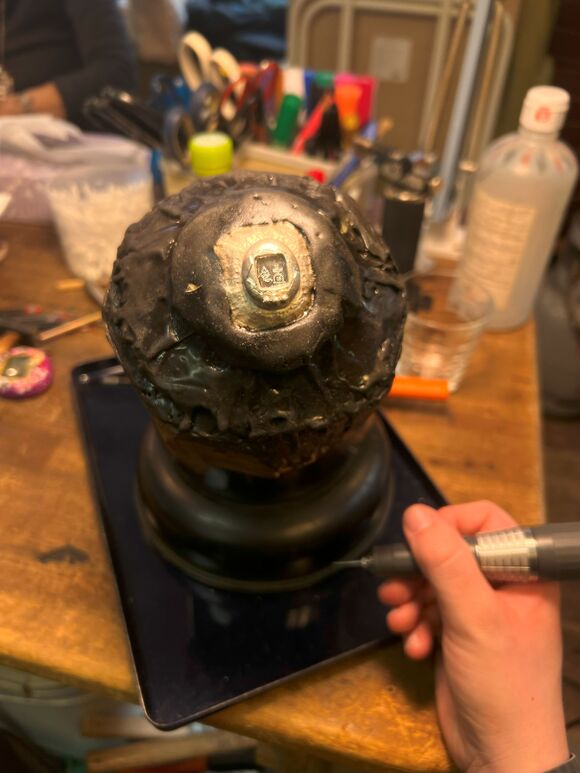
Silver Engraving
Engraving the Japanese death screen Tamagotchi
Outcome of the residency
I feel that I have learnt a lot both technically and theoretically during my residency. It was great to go to the silversmithing workshop very regularly and start working on something concrete almost immediately upon arrival and continue steadily. I have two silver objects that I could not have created in a different context, and I do not only take the objects with me but also the knowledge on how to create them and use the technique for different things back in my studio. I am also particularly grateful for the friendships I have made during my stay in Japan – the relationship to my silversmith teacher, his sister and some other students became deep, even if language was an obstacle at times. It felt important to make friends of different ages. I am inspired by the ways different artists I have met navigate the Tokyo art scene, how they create rooms for art, for people coming together over a cause. I hope to nurture these friendships over the next years, and I wish to come back to Tokyo and broader Japan. Regarding my maid café research I have not yet arrived at making a work – the video I showed at the open studio to me seems more like a draft. I wanted to focus on observing, learning and being surprised during my stay and I plan to work on my findings for at least the next year. I will have to find a way to leave the comfort of the screen with the characters I usually perform in my video works and to make them interactable to reflect on the intimate spaces of Maid Cafés. So, I’m thinking of working with live performance. Performance that also includes screens (just like the shows in Akiba Broadway), and work on a longer, more elaborated video piece.
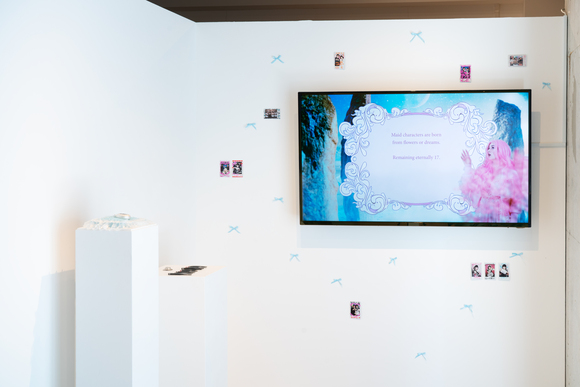
Open Studio
Silver, Fabric, Lace, Steel, Screen, Ribbon, Polaroids
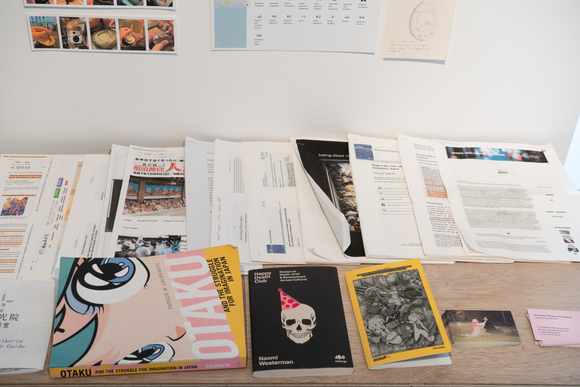
Research table at open studio
Books, Lists, References
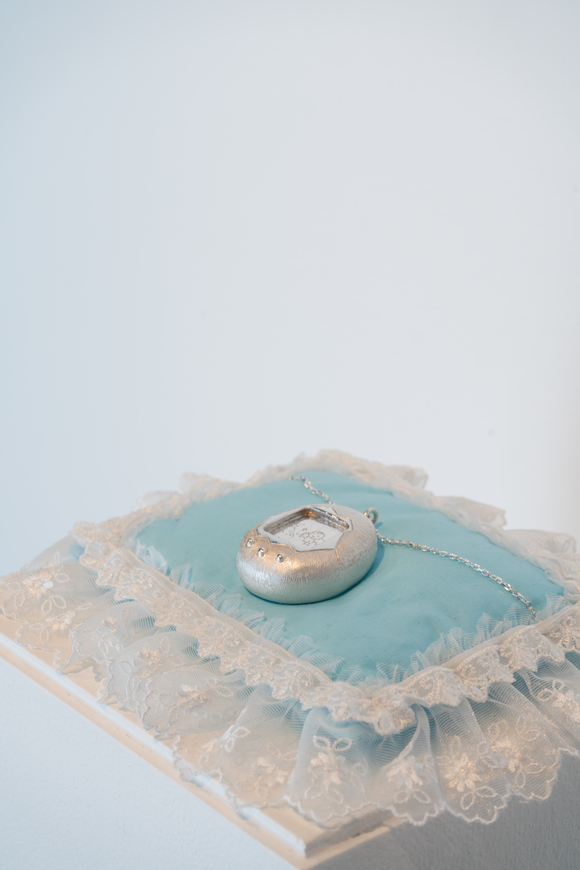
International first-gen death screen Tamagotchi
Silver, Fabric, Lace
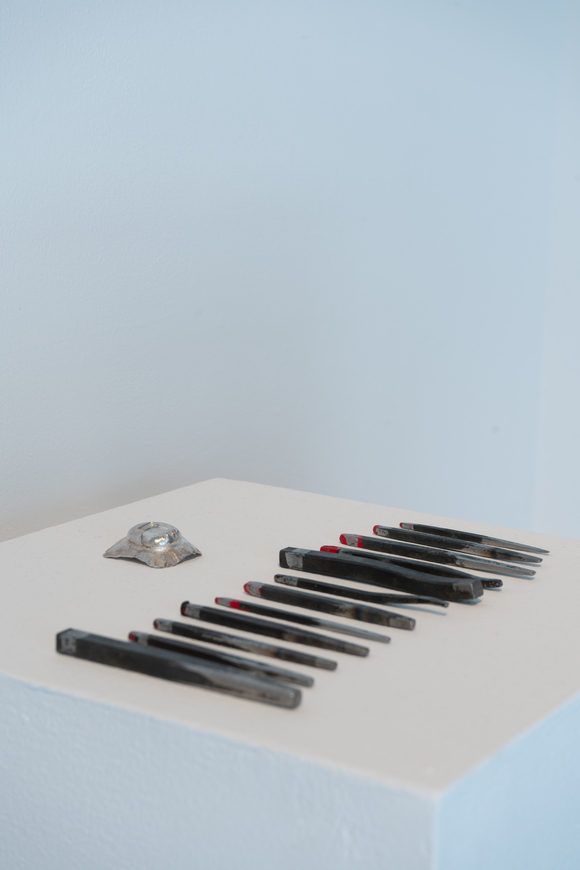
Documentation of self-made Tagane (tools) at Open Studio
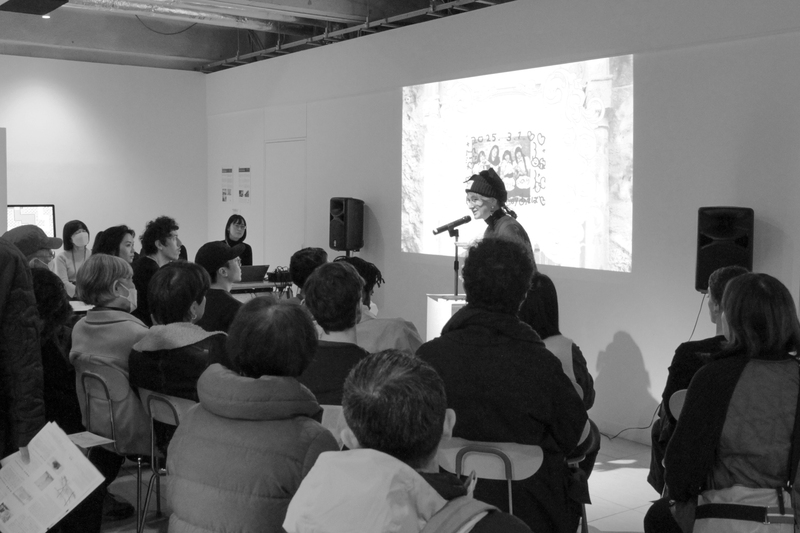
Talk at open studio
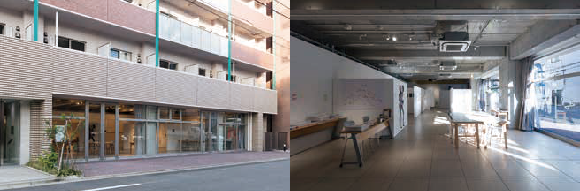
Our Facilities