KIM Sujeong
- TOP >
- Archives >
- Residency Program >
- KIM Sujeong
Institutional Recommendation Program
update: 2026.7.6
KIM Sujeong
| Participating Project | Institutional Recommendation Program |
|---|---|
| Activity Based | Busan (Korea) |
| City / Place stayed | Tokyo |
| Period | 2025.9-2025.11 |
Purpose of the residency
My purpose in joining this program is to expand my practice by exploring feminist perspectives and the hidden violence within intimate relationships in East Asia. Tokyo, with its layered histories and cultural contexts, offers a vital site to examine how narratives of love shape women’s lives through sacrifice and silence. By engaging with local perspectives, I aim to develop insights that resonate beyond national boundaries. This residency will allow me to deepen my research and create work that questions normalized forms of care and power.
Plan during the residency
- Research traditional Japanese stories to explore female narratives and their representation in cultural history.
- Investigate how these narratives intersect with contemporary gender roles and expectations in domestic life.
- Conduct dialogues and interviews with Japanese women in their 20s–40s, identified through artist and community networks.
- Translate collected stories and experiences into drawings, using visual language to highlight emotional and structural themes.
- Conceptualize these drawings as everyday objects for installation, experimenting with ways to embody intimate memories and social patterns.
Activities during the residency
During the TOKAS residency, I investigated the structures of everyday violence and sacrifice experienced by women in Japanese society through three objects and five individuals. My research centered on mamachari (a mother’s bicycle), randoseru (a school backpack), tezukuri (handmade crafts), and senninbari (a thousand-stitch belt), approaching them as carriers of gendered labor, care, and historical memory. Alongside drawing and archival research, I wrote short reflections that emerged intuitively throughout my process. Through conversations with five participants, I examined how women seek alternatives within systems of discrimination, violence, and sacrifice—by refusing silence, opening new spaces, confronting structural violence through art, and practicing self-healing while building solidarity with others. These five approaches were documented through interviews and email correspondence.
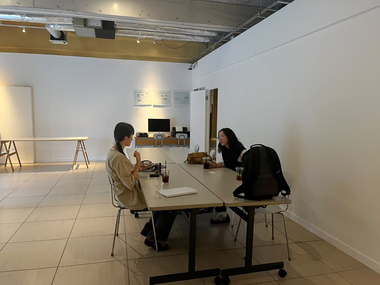
Interview for Research, 2025
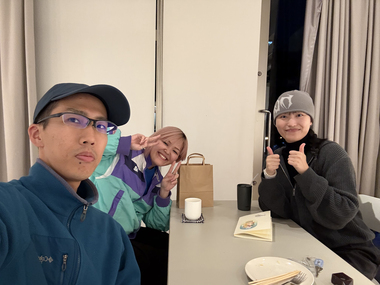
Interview for Research, 2025
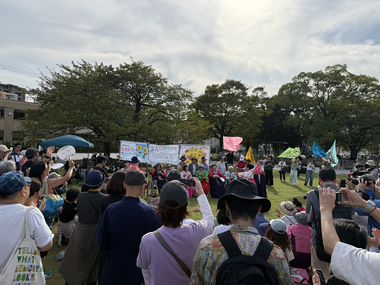
View of Research, 2025
Outcome of the residency
During the residency, I was able to consolidate my research into a clear structure that connects objects, personal narratives, and written reflection. One of the key achievements was developing a methodology that treats interviews and correspondence not only as reference material but as an integral part of the artwork. This process resulted in a research-based artist book and laid the groundwork for future installations and sound works. The residency also allowed me to recontextualize my ongoing interest in intimacy, violence, and care within Japanese social and historical frameworks. Moving forward, I plan to further develop my artistic practice by integrating the diverse ways of living and working that emerged through conversations and exchanges with the interview participants. Reflecting on the residency, I recognize that having more time for sustained and long-term engagement with local participants would have enriched the research process.
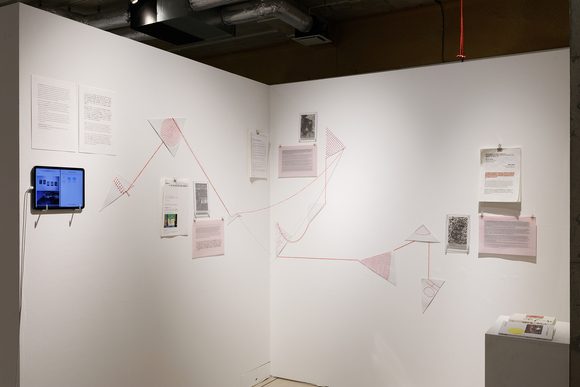
Research texts, drawings, and nine small Senninbari fragments, variable installation, 2025
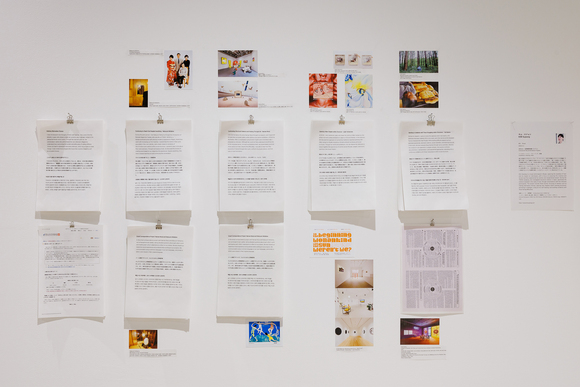
Interview texts with five participants, variable installation, 2025
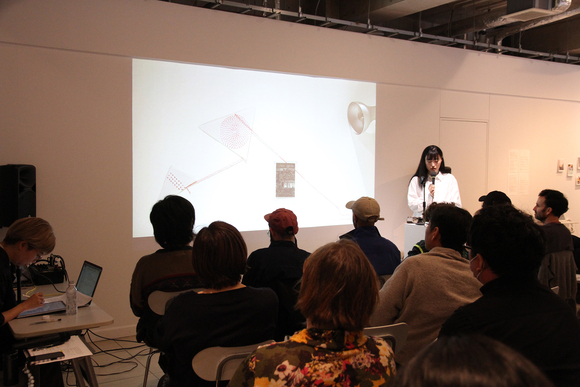
Open studio artist talk, 10 min, 2025
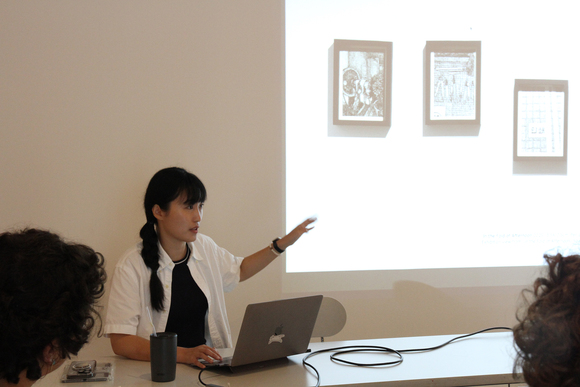
Presentation during the residency, 2025
Our Facilities