GANG Donghoon
- TOP >
- Archives >
- Residency Program >
- GANG Donghoon
International Creator Residency Program
update: 2026.1.5
GANG Donghoon
| Participating Project | International Creator Residency Program (Individual Projects) |
|---|---|
| Activity Base | Frankfurt am Main (Germany) / Seoul |
| City / Place stayed | Tokyo |
| Period | 2026.1 - 2026.3 |
Purpose of the residency
Japan’s proactive adoption of Western culture through the Meiji Restoration transformed Western music from a tool of domestic modernization into a mechanism for colonial assimilation. This research focuses on Isawa Shūji, a U.S.-trained educator who established Tokyo’s first music school and implemented sound-based assimilation policies in Taiwan. The study specifically examines his Shōka (school song) textbooks—a strategic musical compromise between West and East—and analyzes how these were adapted within the colonial-era Korean Empire. By tracing these historical transformations, this research seeks to uncover the enduring impact of colonial soundscapes on contemporary East Asian music education and cultural identity.
Plan during the residency
・A Historical Study of Isawa Shuji and the Implementation of Shōka in Colonial Taiwan’s Music Education System
・A musicological analysis of Shōka based on Primary School Songbooks(小学唱歌集)
・An investigation into a new musicological formation of Shōka produced through Isawa Shūji’s strategic compromise between Western and Eastern musical systems(和洋折衷)
・Tracing the historical trajectory of JOAK, Japan’s first radio broadcasting station, and JODK, the colonial-era station established during Japanese rule in Korea
・Organizing the research and developing the practical components and musical scores for the work
Activities during the residency
During my residency, I investigated 伊澤修二 (Isawa Shūji)’s pivotal role in establishing the foundation of modern music education. My research focused on his academic training in the U.S. and the subsequent formation of the 音楽取調掛 (Music Investigation Committee). I specifically analyzed the musical standards he selected for the 小学唱歌集 (Primary School Songbooks) and his innovative 和洋折衷 (Wayō-Setchū) approach—a strategic compromise between Western and Eastern musical systems. By interviewing scholars from diverse fields, I compared Japan’s pre-modern musical landscape with the socio-political roles of music following these new implementations. I examined how Western music, through Isawa’s influence, was eventually naturalized into 童謡 (Dōyo). Furthermore, I explored these historical transformations by contrasting Isawa’s work with the 普通教育唱歌集 (Common Education Songbooks) published in Korea. This research culminated in the organization of findings and the development of practical musical scores, uncovering the colonial impact on East Asian musical identity.
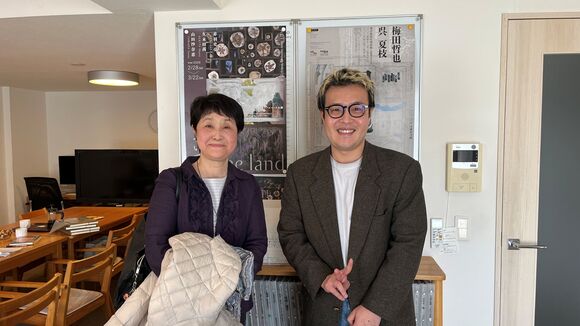
Meeting with Prof. Tsukahara
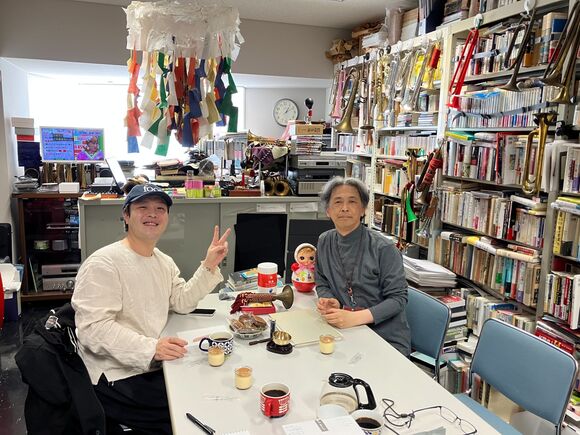
Meeting with Prof. Okunaka
Outcome of the residency
The residency provided an invaluable opportunity to engage with distinguished musicology professors whom I would otherwise have had difficulty meeting individually. These encounters allowed me to examine my research topic through a multifaceted lens—political, social, and cultural. Beyond mere interviews, I was granted direct access to their private archives and primary sources, which significantly deepened my empirical analysis. Furthermore, these mentors opened up new research possibilities and facilitated connections with other scholars, greatly expanding my academic network. I plan to maintain continuous intellectual exchange with these scholars. A key upcoming project is a sound-based work that rearranges the song Musunde Hiraite (むすんでひらいて), showcased during the Open Studio, into a multilingual choral piece. Parallel to this creative practice, I will broaden my research to investigate 伊澤修二 (Isawa Shūji)’s influence not only in Korea but also in Taiwan and China, aiming for a comprehensive East Asian perspective by comparing the 普通教育唱歌集 (Common Education Songbooks) across regions. This experience has provided a substantial foundation for the continued evolution of my research and artistic practice.
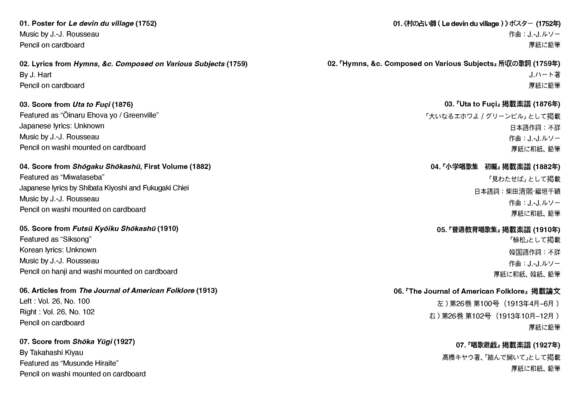
Index for Rousseau’s Dream, 2026, digital image
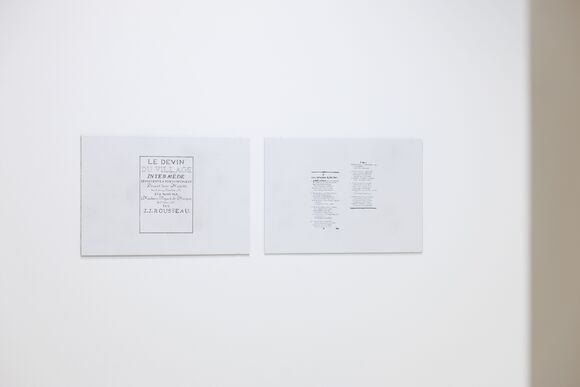
Rousseau’s Dream, 2026, 7 drawing series on cardboard, Washi, Hanji, 29.7x42cm each
Photo: MANIWA Yuki
Our Facilities