HU Liwei
- TOP >
- Archives >
- Residency Program >
- HU Liwei
International Creator Residency Program
update: 2026.4.27
HU Liwei
| Participating Project | International Creator Residency Program (Individual Projects) |
|---|---|
| Activity Based | Chongqing/Amsterdam |
| City / Place stayed | Tokyo |
| Period | 2026.1 - 2026.3 |
Purpose of the residency
Few things suit a snowy day in Tokyo better than yakiimo. While at TOKAS, I want to develop a “mobile sweet potato cart” that may not take a literal form. Based on Imohyakuchin, an Edo-period cookbook, the project explores how memories are shared and remade through sweet potato recipes.
The “cart” begins in Kawagoe, an Edo-era sweet potato town, moves to the Hoshiimo Shrine in Ibaraki, and continues south to Kagoshima for a sip of imo-shōchū. It also extends into anime and Japanese pop culture, where sweet potatoes circulate as images, gestures, and social cues in global media.
Plan during the residency
- Conduct archival research on Imohyakuchin and Bansho-kō (1735) and related visual documents at the National Diet Library and Tokyo National Museum.
- Conduct field visits in Kawagoe, Ibaraki, and Kagoshima to observe how sweet potatoes function across local history, ritual, production, and drinking culture.
- Collect sweet potato recipes from local residents and explore adapted or contemporary variations as living archives.
- Research how Yakiimo are represented in Japanese anime.
- Experiment with recipes, sensory documentation, sweet potato fibers, and shared meal formats to develop possible presentation forms.
Activities during the residency
During my residency at TOKAS, I developed a research-based practice around the cultural, historical, and spatial dimensions of sweet potato. Beginning with Imohyakuchin, I conducted archival research at the National Diet Library, which led me beyond recipes toward broader questions of food culture and urban history. I focused my field research in Kawagoe, examining archives, advertisements, and museum collections to trace its shifts from Edo-period circulation to wartime and postwar systems, including connections to colonial histories in Taiwan and Jeju, where “tropical” imaginaries were constructed and mobilized. In relation to questions of the “tropical” and the “south,” I also visited botanical gardens. I approached sweet potato through everyday practices, tracing its movement across ordinary consumption, seasonal economies, and historical conditions. I also experimented with its materiality through sweetness, translating it into bio-based fabric.
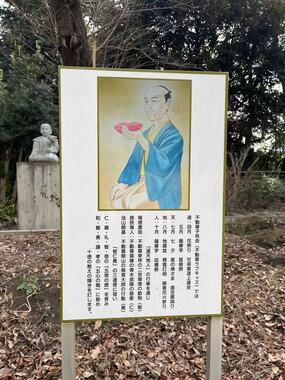
Visiting Ryūsenji, Aoki Konyō
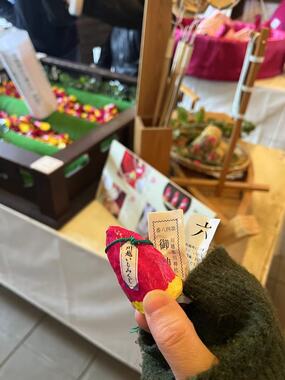
Sweet potato fortune telling at Kawagoe Hikawa Shrine
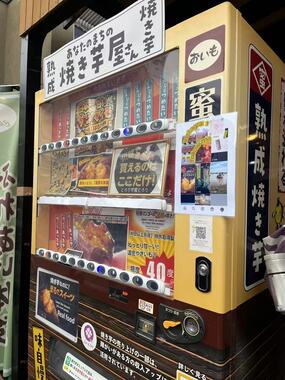
A sweet potato vending machine in Kawagoe
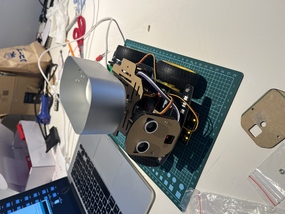
Testing first version of Yakiimo cart
Outcome of the residency
The residency enabled me to establish a multi-layered research framework linking archival, spatial, and material approaches. It was initially motivated by an ongoing research interest that brought me to Japan, but through fieldwork and engagement with local contexts, I developed a participatory yakiimo cart project grounded in site-specific conditions. This was my first time working with DIY electronics and simple programming, shifting from a mainly lens-based practice. The shift also responded to Tokyo as a layered urban environment with cyberpunk associations, where infrastructures and consumer electronics coexist with everyday life. Alongside the site-responsive work presented at the Open Studios, my research at TOKAS extends from Japan to wider questions of how “tropical” and southern imaginaries are constructed. I began developing a video installation under this framework, Why Can’t the Tropical Be in the Dirt? Due to limited time and capacity, its production remained incomplete, and I focused on preparatory research and location scouting for further development.
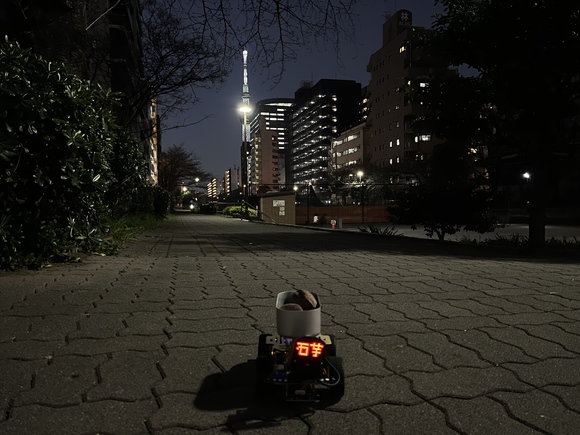
Roasting in process… (working title), 2026
Sweet potato, Four-Wheel Drive, Dimensions Variable
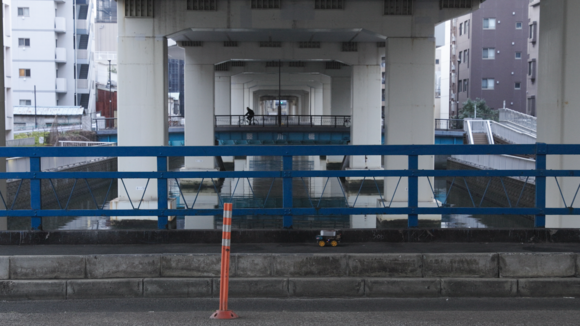
Roasting in process… (working title), 2026
Sweet potato, Four-Wheel Drive, Dimensions Variable
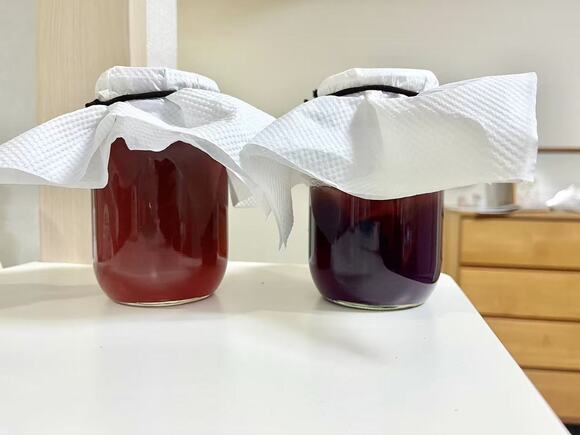
Transferring the sweetness of sweet potato into scopy bio fabric
Our Facilities