Emile VAN HELLEPUTTE
- TOP >
- Residency Program >
- Invited Creators >
- Emile VAN HELLEPUTTE
Exchange Residency Program
(International Creators from abroad)
update: 2026.10.28
Emile VAN HELLEPUTTE
| Participating Project | Exchange Residency Program (Creators from abroad) |
|---|---|
| Activity Based | Brussels |
| City / Place stayed | Tokyo |
| Period | 2026.5 - 2026.7 |
Purpose of the residency
During my residency I will research the use of onomatopoeia in Japanese language — more specifically gitaigo, onomatopoeia that mimic non-auditory phenomena. I regard gitaigo as conceptually parallel to what I call acousmatic objects: silent objects that nonetheless imply or evoke sound. Both operate in the interstice between the seen and the heard, through imagination rather than direct perception. By engaging with the grammatical and sensorial sensitivity of Japanese, I aim to expand my understanding of how listening and language can be co-creative acts — acts through which we negotiate between the concrete and the imagined, the said and the heard.
Plan during the residency
- Organise a participative sound investigation by means of sharing testimonies, listening sessions and recording.
- Research and experiment with different formats to present, both visually and sonically, the results of this investigation.
Activities during the residency
During my residency, I researched Japanese onomatopoeia — more specifically gitaigo, a class of words describing non-auditory phenomena. My research focused on the shared sonic imagination that these words embody in Japanese culture.
Alongside conducting interviews with locals, I adopted a participatory approach, inviting artists and musicians to imagine and imitate these words. After an initial phase of linguistic study, I worked together with artists to make field recordings and organised a collective listening session with them.
I visited multiple concerts and got in contact with musicians from the improvisation scene in Tokyo and invited them to record music for this project. Furthermore, I collected vocal imitations by locals.
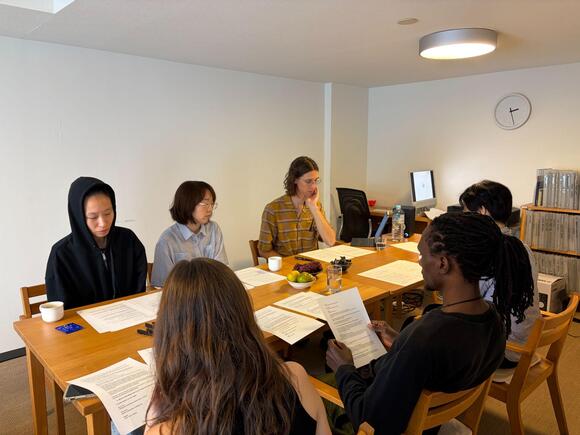
Collective Listening Session
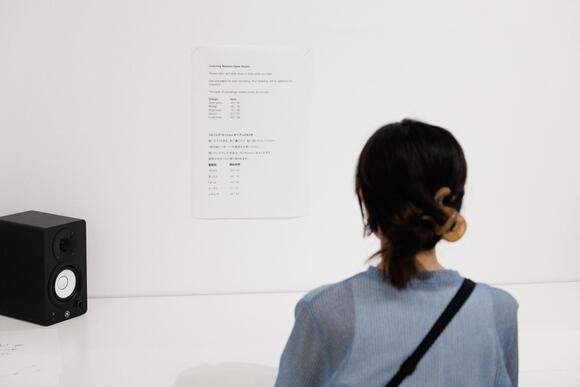
Open Studio view, Six Gitaigo (field recording)
2026, sound, 30’
©MANIWA Yuki
Outcome of the residency
My research resulted in three different methodologies for recording and imagining the sound and associations that exist in relation to Gitaigo in Japanese culture. The types of recordings I proposed were field recording, music improvisation and voice recording.
Working with Japanese language, this research was very specific to the context of Japan and should therefore be continued within this context. However, the methodologies I proposed can be applied to different language contexts.
With the material produced during the residency, I plan to publish the music recordings and if possible organise a release tour in Tokyo and Japan. If the opportunity arises, I would love to continue developing the other methodologies within the context of Japan as well.
I had imagined to also work on a visual output for this work within the context of this residency, but time turned out to be too limited for that. The visual output of this research therefore remained quite minimal.
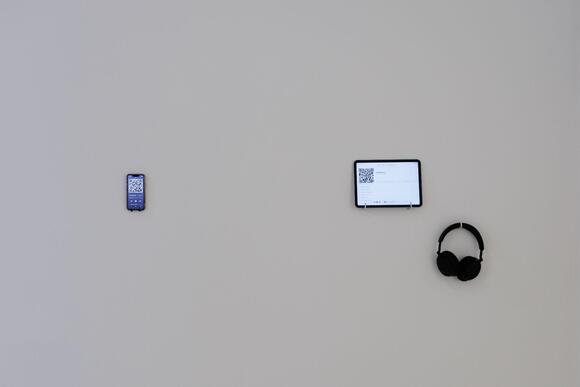
Open Studio view
1 Six Gitaigo (voice recording) 2026, sound, 9’01”
2 Six Gitaigo (music)
Right wall 2026, sound, 62’21”
©MANIWA Yuki
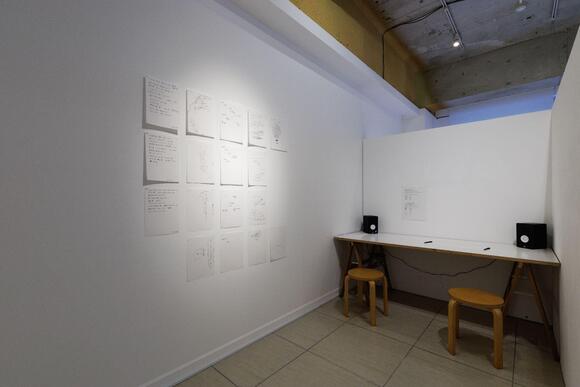
Open Studio View
Left wall
Six Gitaigo (drawings from listening session), 2026, ink on paper, variable dimensions
Right wall
Six Gitaigo (field recording), 2026, sound, 30’
©MANIWA Yuki
Our Facilities