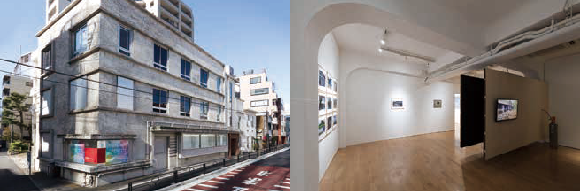
Carlos VIELMA “A mechanical wilderness”
- TOP >
- Archives >
- Exhibitions / Performances >
- Carlos VIELMA “A mechanical wilderness”
Carlos VIELMA “A mechanical wilderness”
OPEN SITE 10 | Open Call Program【Exhibition】
A mechanical wilderness is a video installation filmed in a Mexican ghost town. It was inspired by The Million-Year Picnic, the final short story in Ray Bradbury’s post-apocalyptic science fiction book The Martian Chronicles. In Bradbury’s timely dystopian tale, a family escapes Earth in an attempt to rebuild their life on Mars. Similarly, Vielma’s rural adaptation of the story explores the themes of migration, colonization, and human existence on our planet. It is accompanied by a series of archeological artifacts found in the ghost town that transport the viewer to the threshold between fiction and reality.
| Period | Oct 11 (Sat) - Nov 9 (Sun), 2025 |
|---|---|
| Closed | Mondays (except Oct 13, Nov 3), Oct 14, Nov 4 |
| Time | 11:00-19:00 |
| Admission | Free |
| Venue | Tokyo Arts and Space Hongo: Space A (1F) |
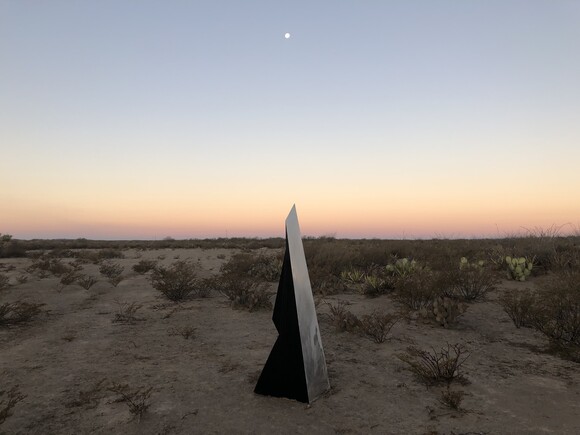
Ghost town 2022
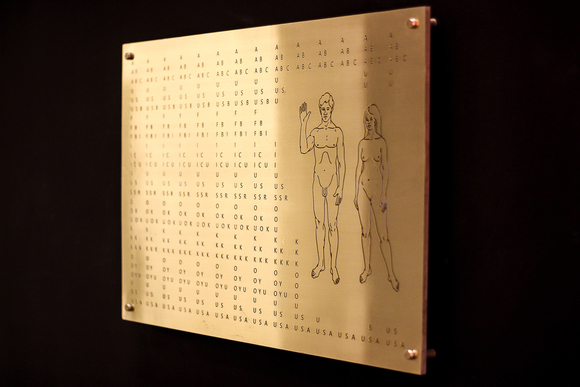
Magic spell 2022
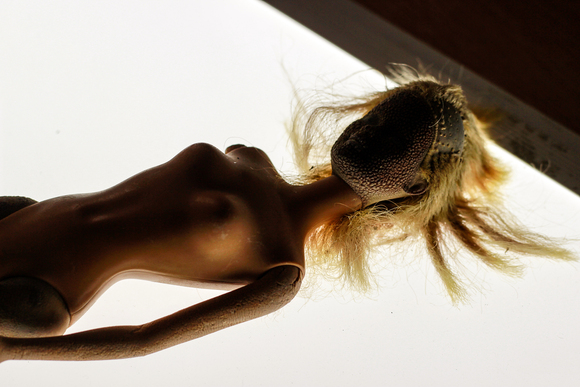
Doll 2022
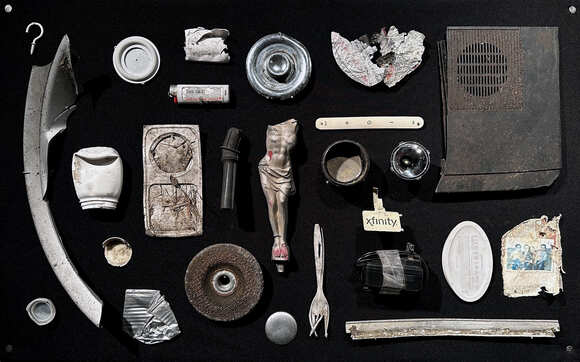
Objects 2022
Related Event
Gallery tour
| Date | Nov 1 (Sat) 14:00- |
|---|---|
| Speaker | Carlos VIELMA |
| Admission | Free |
| Venue | Tokyo Arts and Space Hongo: Space A (1F) |
| Language | English |
Profile
Trained as an architect, Carlos Vielma is a Mexican visual artist who explores the aesthetics of contemporary ruins
and their reconstruction through fiction. His paintings, videos, and installations deal with subjects such as migration,
borders, landscapes, and monuments. He is currently interested in art as it relates to public spaces. Recent
exhibitions: “Here the homeland begins,” Marco, Museo de Arte Contemporaneo de Monterrey, Mexico, 2025, “An Infinite Picnic,” Lawndale Art Center, Houston Texas, United States, 2025.
Catalog
To download the catalogs of "OPEN SITE 10," please click here.

Review
Picnic in a mechanical wilderness
HATANAKA Minoru(OPENSITE 10 Jury member)
The technological environment that underpins contemporary life has become as closely connected to our daily existence as the natural environment. In this technological setting, artificial structures do not stand in contrast to nature. They serve, much as natural systems do, as part of the infrastructure that supports daily life. And just as the natural environment can be seen as intertwined with accumulated human experience and knowledge, we now continually access the information woven into our technological environment by glancing at our mobile devices, even when much of that information proves unnecessary.
The installation A mechanical wilderness by Carlos Vielma presents, as its title suggests, a vision of humanity’s disappearance within a technological environment of its own making. The work was inspired by a ghost town in Mexico known as Marte (meaning “Mars”) because of its landscape. This ghost town is located near the artist’s mother’s hometown. For the artist, the landscape of that site elicited memories of Ray Bradbury’s science fiction classic The Martian Chronicles, which Vielma employed as a source text for the work.
The Martian Chronicles (1950) is a collection of short stories Bradbury wrote in the 1940s, assembled to form a single chronicle set on Mars. The original edition comprised 26 stories set between 1999 and 2026. In later years, the timeline was adjusted so as to begin in 2030, and the book was republished. Vielma’s work draws on the final chapter, The Million-Year Picnic. It is surely not coincidental that, in the original edition, this chapter takes place in 2026.
The work comprises two exhibition spaces. When the element intended to be viewed or read from outside TOKAS is included, it unfolds in three stages. On the two windows of the gallery, red LED signs reading “MY BATTERY IS LOW”… and …“AND IT’S GETTING DARK” are installed so they can be seen from outside the venue. These messages invite visitors into the installation in the first space, assembled from discarded materials collected in the Mexican ghost town. In the adjacent space, cordoned off by a curtain, a video work drawing inspiration from The Million-Year Picnic is shown.
The Martian Chronicles traces a history that begins with humanity’s exploration of Mars, encounters with Martians, and the conflicts that emerge between them, followed by the extinction of the Martians, the colonization of Mars, and a global nuclear war on Earth. The fact that all of this unfolds within only twenty-seven years now reads as remarkably prescient. The chapter The Million-Year Picnic tells the story of a human family that leaves a decimated Earth, settles on Mars, and decides to restart human history, identifying as Martians and looking toward a future a million years ahead. In Vielma’s work, the story of Earth’s people losing their home, becoming Martians, and beginning history anew after colonization in space and nuclear war on Earth, connects to the landscape of the Mexican ghost town. At the same time, the work presents a world without humankind by reinterpreting the original story as if seen from the perspective of a Mars rover. In this sense, it occupies a narrative space similar to There Will Come Soft Rains, the chapter that precedes The Million-Year Picnic in The Martian Chronicles. The penultimate chapter depicts a postapocalyptic setting in which, after nuclear war has eliminated humanity, only machines continue their routines unchanged. A plaque engraved with coded information that had been attached to a space probe as a self introduction from Earth is (mis)read by a Mars rover, and a redefinition of the human race begins.
At the opening talk, it was mentioned that the work was also inspired by Arthur C. Clarke and Stanley Kubrick’s 2001: A Space Odyssey (1968). Indeed, the Star Child that appears in the film’s final scene, an evolved form of humanity following an encounter with an alien presence or with God, seems to overlap with the image of the family reflected in the water in The Million-Year Picnic. It also resonates with the viewer’s own figure, filmed in real time, that appears at the end of Vielma’s video work.
The technique of incorporating viewers into a work through a live camera has a long history in video and media art and can even be regarded as a classical methodology. What was most striking here, however, was how effectively it operated as a storytelling device.
Because it aligns so closely with the work’s content, it draws the audience into the world of the work with extraordinary clarity and impact.
HATANAKA Minoru
Curator, Critic of Music and Art. Born in 1968. Involved with the NTT InterCommunication Center [ICC] prior to its opening in 1996, serving successively
as Senior Curator and later as Head of the Curatorial Department, before departing the institution at the end of March 2025. Recent exhibitions: “Tribute to RYUICHI SAKAMOTO: Music/Art/Media,” 2023, “evala: Emerging Site/Disappearing Sight,” 2024.
Participating Creator
Our Facilities