KIM Yesul
- TOP >
- Residency Program >
- Invited Creators >
- KIM Yesul
Exchange Residency Program
(International Creators from abroad)
update: 2026.4.2
KIM Yesul
| Participating Project | Exchange Residency Program (Creators from abroad) |
|---|---|
| Activity Based | Seoul |
| City / Place stayed | Tokyo |
| Period | 2026.5 - 2026.7 |
Purpose of the residency
At TOKAS, I want to develop my research on the intersection of Korean and Japanese SF and alternative future imaginaries in East Asia. My work connects geopolitical SF with orally transmitted prophetic songs, examining how predicted futures shaped by data capitalism intersect with unofficial imaginaries carried by oral traditions.
Working in Tokyo allows me to engage directly with local language, institutions, and cultural contexts. I approach the city not as a backdrop, but as an active environment that can transform the structure and language of my work.
Plan during the residency
- Research East Asian science fiction and oral prophetic songs, focusing on different constructions of the future.
- Visit libraries, archives, and independent bookstores, and meet researchers and cultural practitioners in Tokyo.
- Conduct field recording and filming in urban and institutional environments.
- Focus on children’s voices, collective singing structures, and circulating fragments of language.
- The collected materials from Tokyo will be further developed into video and installation works.
Activities during the residency
I explored imaginaries of the future in East Asia and folk songs through the industrial histories of Japan and Korea. The project began with my mother’s experience of working at Japanese watch factories in Tokyo and the Masan Free Export Zone in South Korea during the 1980s. Connecting her return to Tokyo more than four decades later with my own generational perspective, I researched manufacturing and labor history in Korea and Japan, and the technological shifts that later led toward digital and technologies.
I also brought folk and work songs into the present, as a way of reconfiguring memories of the past. This research became Watch Factory Work Song, developed with students from Tokyo Korean Junior and Senior High School, and presented as a video work featuring their choreography.
Outcome of the residency
During the residency, I was able to expand the story that began with personal memory into broader historical and industrial contexts connecting Korea and Japan. Especially, talking with students at Tokyo Korean Junior and Senior High School led me to think more deeply about the history between Korea and Japan and the ways different generations experience and understand it.
By following my mother’s memories as personal testimony, I also investigated the working conditions of Korean women factory workers at the time and how their experiences were connected to South Korea’s industrialization and economic development.
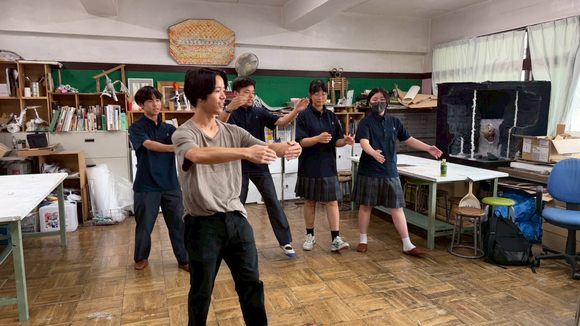
Filming and recording. Choreographed by YOSHIDA Taku
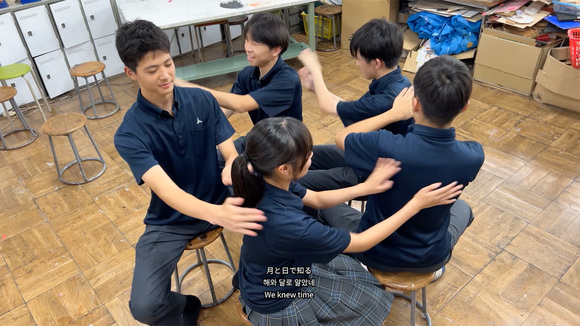
Watch Factory Work Song, 2026, video, color, sound, 8min 55sec
Our Facilities